Introduction
Walls are no longer just backgrounds. In 2026, the wall itself has become an important part of the design.
Fluted tiles — also known as ribbed tiles, groove tiles, or textured wall tiles — are becoming one of the most loved wall tile styles in Indian homes, offices, bathrooms, kitchens, and commercial spaces. Interior designers use them to create feature walls, while homeowners love them because they can instantly transform a plain wall into a statement.
But beyond the trend, there are practical decisions to make.
Where should you use fluted tiles? Which finish is better for your space? Should you choose glossy or matt? Which size works best for a kitchen, bathroom, TV wall, or reception wall?
This guide covers everything — from placement and sizing to finish selection and common mistakes.
What Are Fluted Tiles?
Fluted tiles are tiles with a raised, groove-based surface pattern. They usually have vertical or horizontal ridges that create depth, texture, and shadow on the wall.
They are different from regular printed tiles because the texture is physical, not just visual. When light falls on the ridges, it creates a beautiful play of shadows. This is what makes fluted tiles look premium, architectural, and more interesting than a flat wall tile.
Common types of textured wall tiles you may come across:
- Fluted / Ribbed tiles — tiles with vertical or horizontal linear grooves
- KitKat tiles — narrow rectangular tiles arranged in a strip-like pattern
- 3D elevation tiles — high-depth tiles used for facades, entrance walls, and exterior surfaces
- Stacked stone-look tiles — textured tiles that create a natural stone cladding effect
Each type creates a different mood. Fluted tiles feel clean, modern, and premium. KitKat tiles feel more playful and detailed. 3D elevation tiles are usually stronger and more rustic in appearance.
Understanding the difference helps you choose the right tile for the right space.
Where Do Fluted Tiles Work Best?
Living Room Feature Walls
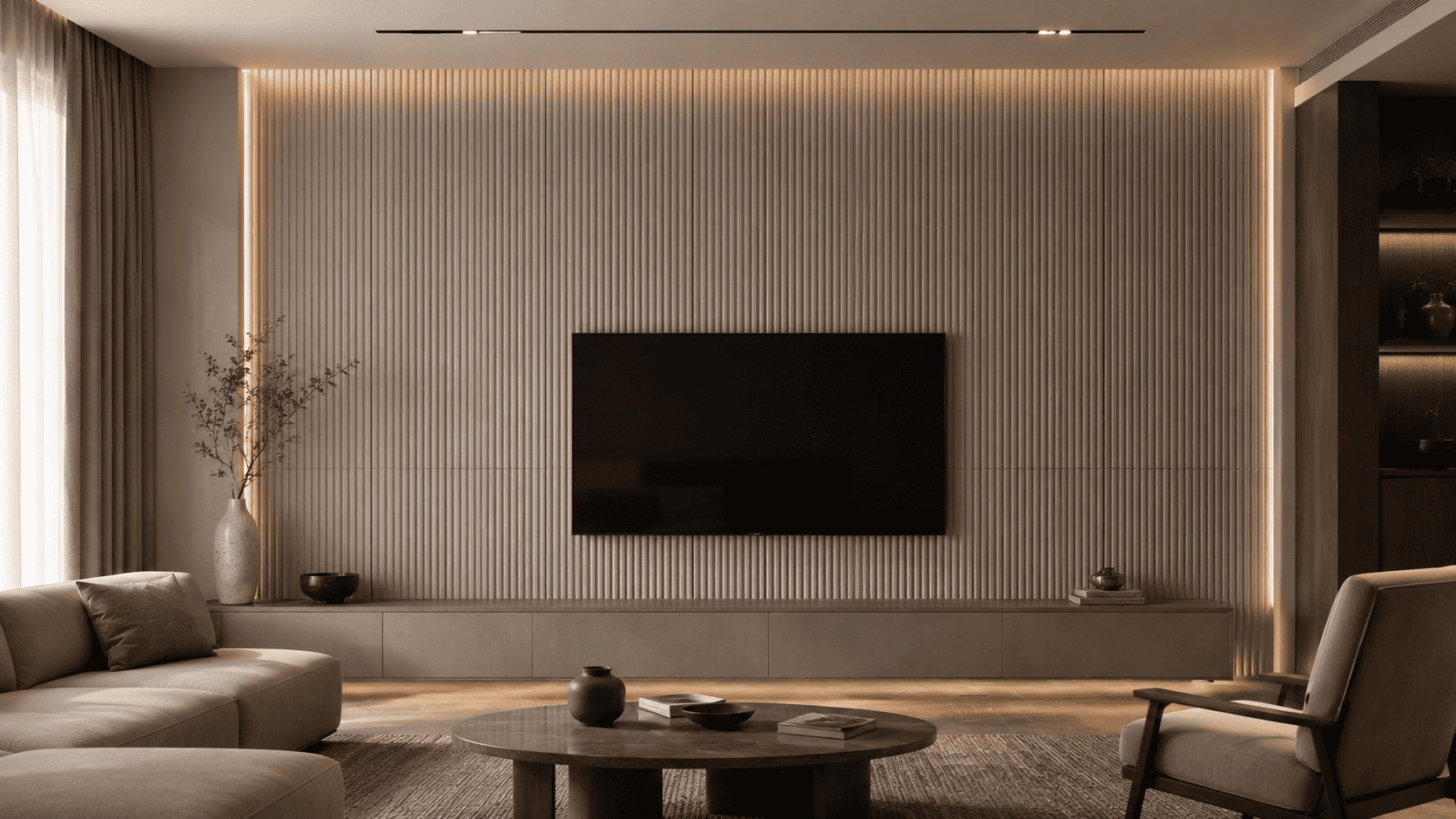
Living room feature walls are one of the best places to use fluted tiles. A single wall behind the sofa or TV unit can completely change the look of the room.
Fluted tiles in warm beige, soft grey, ivory, taupe, or earthy tones add depth without making the room look too busy. They also work beautifully with wooden furniture, neutral sofas, marble-look flooring, and warm lighting.
What works:
- Full-height fluted tile wall in a neutral shade
- Matt fluted tiles behind TV units to avoid glare
- Warm LED lighting from the side or top to highlight the grooves
- Minimal furniture so the wall remains the main feature
- 600 × 1200 mm fluted tiles for a cleaner, large-format look
What to avoid:
- Using fluted tiles on all four walls
- Choosing very dark colours in a small living room
- Using harsh white lighting, which can flatten the texture
- Overcrowding the wall with too many shelves, frames, or panels
For living rooms, matt fluted tiles are usually the better choice because they create a softer and more premium look. They do not reflect too much light, which makes them ideal for TV walls and seating areas.
Bedroom Headboard Wall
Fluted tiles behind the bed can create the feel of a boutique hotel room. They replace the need for a heavy headboard panel, wallpaper, or wooden wall cladding.
A fluted tile headboard wall works especially well when paired with warm bedside lamps, soft curtains, neutral bedding, and wooden furniture. The grooves add texture, but the overall look still feels calm and elegant.
Best tile choices:
- Matt fluted tiles for a soft, relaxing look
- Warm white, beige, greige, taupe, or soft grey shades
- 600 × 1200 mm fluted tiles for a seamless headboard wall
- Side lighting or concealed LED lighting to highlight the ridges
Matt finish is usually preferred for bedroom walls because it reduces glare and gives the space a more peaceful appearance. Glossy fluted tiles can be used in bedrooms too, but only when the design specifically needs a brighter or more reflective wall.
For most bedroom headboard walls, matt fluted tiles give a more luxurious and comfortable result.
Bathroom Feature Walls
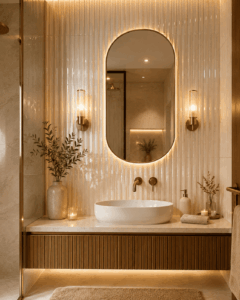
Fluted tiles can make a bathroom look more designed and spa-like. Instead of using plain tiles on every wall, you can use fluted tiles on one selected wall to create a focal point.
Good places to use fluted tiles in bathrooms include the basin wall, vanity wall, dry wall, powder room wall, or one highlight wall inside the bathroom.
Important considerations:
- Glossy fluted tiles work well for bathroom walls because they reflect light and are easier to wipe clean.
- Matt fluted tiles can also be used in bathrooms, especially on dry walls or feature walls where you want a softer look.
- Avoid using fluted tiles on bathroom floors because the grooves can collect dust, soap residue, and water.
- If maintenance is a concern, avoid very deep grooves in direct shower splash zones.
- Use proper lighting so the texture is visible and the wall does not look flat.
Glossy fluted tiles in bathrooms:
Glossy finish is a practical option for bathroom walls, basin backsplashes, and powder rooms. It makes smaller bathrooms look brighter and reflects light beautifully.
Matt fluted tiles in bathrooms:
Matt finish works well when you want a soft, calm, spa-like bathroom. It is especially suitable for dry bathroom walls, vanity backgrounds, or premium powder rooms.
Fluted tiles pair beautifully with simple floor tiles, marble-look tiles, terrazzo tiles, or soft neutral bathroom palettes. The key is to keep the surrounding tiles simple so the fluted wall remains the highlight.
Kitchen Backsplash
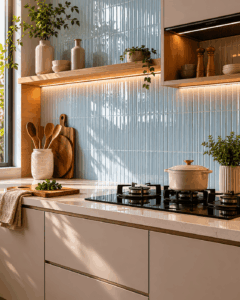
Fluted tiles are a stylish alternative to regular subway tiles or plain kitchen backsplash tiles. They add texture behind the kitchen counter without making the space look too heavy.
For kitchens, glossy fluted tiles are usually the most practical choice. The glossy surface reflects light, makes the kitchen look brighter, and is easier to wipe in areas exposed to water, oil, and stains.
What works:
- Glossy fluted tiles in 75 × 300 mm or 100 × 300 mm
- White, cream, beige, or soft grey tones
- Vertical placement to make the kitchen look taller
- Full-height backsplash instead of a small strip
- Simple countertops and clean cabinetry
What to avoid:
- Very dark colours in a small kitchen
- Too many competing patterns in the same kitchen
- Using extremely deep grooves directly behind a heavy cooking hob if the client cooks a lot of oily food
- Ignoring grout colour
Glossy fluted tiles can make a kitchen backsplash look modern, bright, and premium while still being practical for daily use.
Elevation & Exterior Walls
Textured tiles are also used for elevation and exterior walls, but it is important to understand that exterior elevation tiles are not always the same as interior fluted tiles.
3D elevation tiles, stone-look tiles, and deep-relief exterior tiles are usually designed for building facades, entrance walls, boundary walls, and outdoor feature surfaces. These tiles often have a stronger, more rustic, or natural stone-inspired appearance.
Interior fluted tiles, on the other hand, are more refined and are usually used for walls inside homes, offices, bathrooms, kitchens, and commercial interiors.
If you are choosing tiles for exterior use, always check whether the product is suitable for outdoor conditions, weather exposure, dust, and maintenance.
Choosing the Right Finish for Fluted Tiles
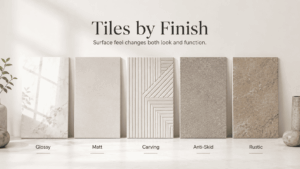
At TilesKraft, fluted tiles are currently available in two practical finishes: Glossy and Matt.
Both finishes work beautifully, but the right choice depends on where the tile is being used.
| Finish | Best For | Why It Works |
|---|---|---|
| Glossy Fluted Tiles | Kitchen backsplashes, bathroom walls, powder rooms, basin walls | Reflects light, makes the space look brighter, and is easier to wipe clean in areas exposed to water or stains |
| Matt Fluted Tiles | TV walls, reception walls, living room feature walls, bedroom headboard walls, commercial feature walls | Gives a softer premium look, avoids glare, and works well where lighting and texture need to feel calm and elegant |
Glossy Finish
Glossy fluted tiles are ideal for kitchens, bathrooms, powder rooms, and basin walls. They reflect light beautifully and make the space look fresh and clean.
Glossy finish is especially useful in smaller spaces because it helps bounce light around the room. This makes compact kitchens, bathrooms, and powder rooms feel brighter and more open.
Glossy fluted tiles are also easier to wipe, which makes them practical for walls that may get water marks, soap stains, or kitchen splashes.
Matt Finish
Matt fluted tiles are ideal for TV walls, reception walls, bedroom headboard walls, lobby walls, and living room feature walls.
Matt finish has a softer, more premium look. It does not create harsh reflections, which makes it perfect for areas where people sit, relax, watch TV, or spend time for longer hours.
Matt fluted tiles also work very well with warm lighting. When light falls from the side, the grooves create a subtle shadow effect that makes the wall look elegant and architectural.
What to Avoid
Avoid using fluted tiles on floors. These tiles are designed for walls. If used underfoot, the grooves can collect dust and become difficult to maintain.
Also avoid mixing too many textures in the same space. If one wall has fluted tiles, keep the surrounding tiles and furniture simpler.
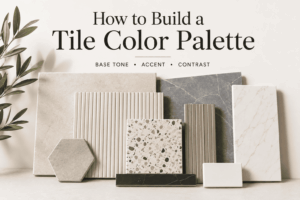
Colour Selection Guide
Fluted tiles work across a wide colour palette. The right colour depends on the mood you want to create.
Warm whites and off-whites
These colours brighten the space and work well in kitchens, bathrooms, bedrooms, and modern living rooms.
Warm beige and sand tones
These shades feel earthy, soft, and inviting. They pair beautifully with wooden furniture, brass fixtures, and warm lighting.
Warm grey
A clean, modern choice for contemporary homes, offices, and reception areas.
Terracotta and rust
These shades create a bold, earthy look. They work well in accent walls, cafes, boutique spaces, and artistic interiors.
Charcoal and black
These colours create a dramatic, high-end look. They are best used in larger spaces or commercial interiors where there is enough lighting.
For smaller rooms, lighter colours are safer. For larger feature walls, deeper shades can create a strong design statement.
Avoid pure white in very dusty or high-humidity environments if maintenance is a concern, because stains and dust can show faster on grooved surfaces.
Sizing Guide for Fluted Wall Tiles
At TilesKraft, fluted tiles are currently available in selected sizes: 75 × 300 mm, 100 × 300 mm, and 600 × 1200 mm.
This curated range allows you to choose between small-format fluted tiles for compact highlight areas and large-format fluted tiles for premium feature walls.
| Fluted Tile Size | Best Application |
|---|---|
| 75 × 300 mm | Kitchen backsplash, bathroom feature wall, niches, powder rooms, small highlight areas |
| 100 × 300 mm | Bathroom walls, kitchen backsplash, compact accent walls, vanity walls |
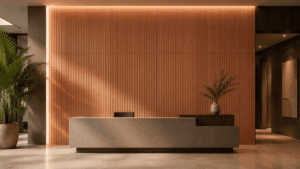
| 600 × 1200 mm | TV walls, reception walls, living room feature walls, bedroom headboard walls, commercial feature walls |
75 × 300 mm Fluted Tiles
This size works well for smaller design areas where you want detail and texture. It is a good choice for kitchen backsplashes, compact bathroom walls, basin backsplashes, and niches.
Because of the smaller format, it creates a more detailed look and works beautifully in vertical placement.
100 × 300 mm Fluted Tiles
This size gives a slightly broader and cleaner look compared to 75 × 300 mm. It is suitable for bathroom feature walls, kitchen backsplashes, powder rooms, and compact accent walls.
It is a practical choice when you want the fluted effect but do not want the wall to look too busy.
600 × 1200 mm Fluted Tiles
This size is ideal for larger feature walls. It gives a more seamless and premium look, especially in living rooms, TV walls, bedroom headboard walls, reception areas, and commercial interiors.
Large-format fluted tiles reduce the number of grout lines and create a more architectural appearance.
Common Mistakes to Avoid
Using Fluted Tiles on the Floor
Fluted tiles are wall tiles. They are not recommended for floors because the grooves can collect dust, water, and dirt. They can also become difficult to clean underfoot.
Use them on vertical surfaces only.
Using Too Much Texture
Fluted tiles are meant to create a focal point. If you use them on every wall, the space can start to feel heavy and visually crowded.
Use them on one selected wall and keep the rest of the space simple.
Choosing the Wrong Finish
Glossy and matt both work well, but they have different use cases.
Use glossy fluted tiles where brightness and easy cleaning are important, such as kitchens and bathrooms. Use matt fluted tiles where you want a softer, low-glare look, such as TV walls, reception walls, and bedrooms.
Ignoring Grout Colour
Grout lines can affect the final look of fluted tiles. If you want a clean, seamless finish, choose grout that is close to the tile colour.
If you want a more graphic look, contrasting grout can be used deliberately, but it should be planned carefully.
Forgetting Lighting
Fluted tiles look their best when light falls across the grooves. Flat white light may not highlight the texture properly.
Warm LED lighting, side lighting, or concealed strip lighting can make the grooves stand out and give the wall a premium finish.
Choosing the Wrong Size for the Space
Small-format fluted tiles work better in kitchens, bathrooms, niches, and compact feature areas.
Large-format 600 × 1200 mm fluted tiles work better for bigger walls such as TV walls, reception walls, bedroom headboard walls, and commercial interiors.
Choosing the right size makes the final result look more balanced.
Final Thoughts
Fluted tiles are one of the easiest ways to make a wall look premium without overcomplicating the design.
They add depth, texture, and character to a space. They work beautifully in homes, bathrooms, kitchens, reception areas, and commercial interiors when used in the right finish and size.
The key is simple: choose the right placement, the right finish, the right size, and the right lighting.
For kitchens and bathrooms, glossy fluted tiles are a practical and beautiful choice. For TV walls, reception walls, bedroom headboard walls, and large feature walls, matt fluted tiles create a softer and more elegant look.
At TilesKraft, fluted tiles are currently available in 75 × 300 mm, 100 × 300 mm, and 600 × 1200 mm, with glossy and matt finish options.
Not sure which fluted tile will work best for your wall?
Share your room size, wall photos, and design brief with the TilesKraft team. We will help you shortlist the right fluted tile size, finish, and colour for your space.
Book a Free Consultation →
https://tileskraft.com/consult
Frequently Asked Questions
Are fluted tiles suitable for bathrooms?
Yes. Fluted tiles can be used on bathroom walls. Glossy fluted tiles work well for bathroom walls, basin walls, and powder rooms because they reflect light and are easier to wipe clean. Matt fluted tiles can also be used on dry bathroom walls or feature walls for a softer look.
Can fluted tiles be used on the floor?
No. Fluted tiles are recommended for walls only. The grooves can collect dust, water, and dirt if used on the floor, making them difficult to maintain.
What is the difference between fluted tiles and KitKat tiles?
Fluted tiles have grooves or ridges on the tile surface itself. KitKat tiles are narrow rectangular tiles arranged in a strip-like pattern. Both create a textured look, but the design effect is different.
Which finish is better for fluted tiles — glossy or matt?
Both finishes are good, but they suit different spaces. Glossy fluted tiles are better for kitchens, bathrooms, powder rooms, and basin walls. Matt fluted tiles are better for TV walls, reception walls, living room feature walls, bedroom headboard walls, and commercial interiors.
What sizes are available in fluted tiles at TilesKraft?
TilesKraft currently offers fluted tiles in 75 × 300 mm, 100 × 300 mm, and 600 × 1200 mm.
Which fluted tile size is best for a kitchen backsplash?
For kitchen backsplashes, 75 × 300 mm and 100 × 300 mm fluted tiles work very well. They create a detailed, vertical texture and look elegant behind counters and cabinets.
Which fluted tile size is best for a TV wall?
For TV walls, 600 × 1200 mm fluted tiles are recommended. They create a cleaner, more seamless look with fewer grout lines.
How do you clean fluted tiles?
Use a soft cloth, microfibre cloth, or soft brush with mild detergent. Avoid harsh scrubbers that can damage the surface. For living room and bedroom walls, regular dry dusting is usually enough.
What lighting works best with fluted tiles?
Warm LED strip lighting, side lighting, or concealed lighting works best. The light should fall across the grooves so that the texture and shadow effect become visible.
© TilesKraft | tileskraft